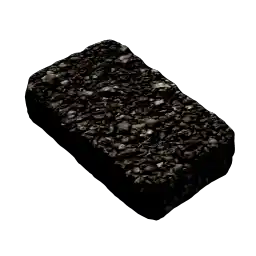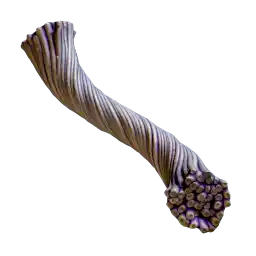


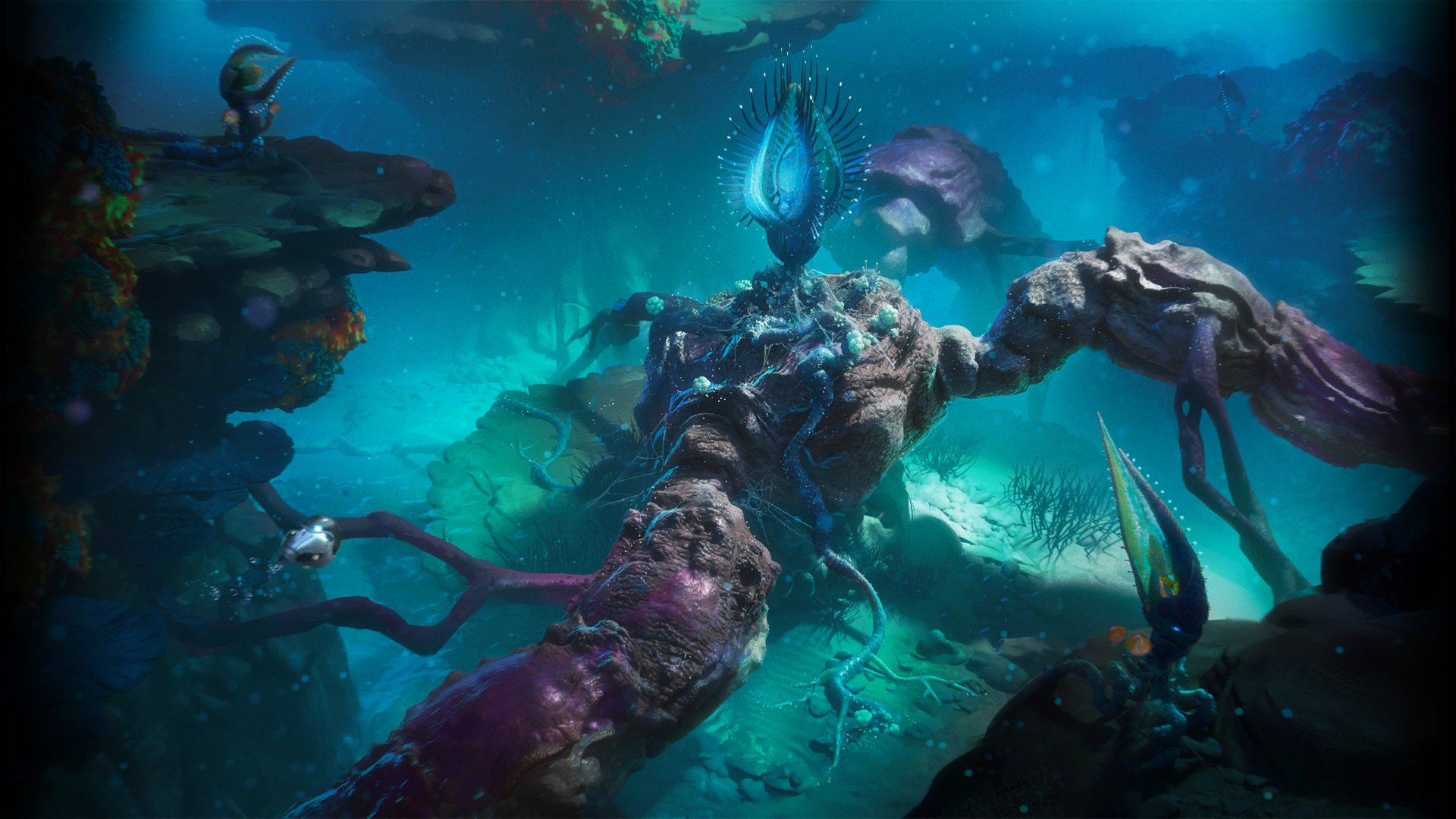
Fibrous Pulp
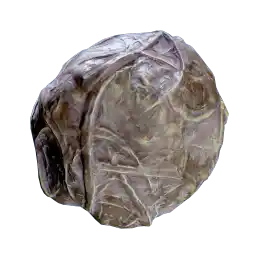
Fibrous Pulp
Raw, fibrous biomatter. Smells of cinnamon and alcohol.
Extracted From
Macaron Sponge Plant
Harvestable native plant life.
Freesia Flower Plant
Harvestable native plant life.
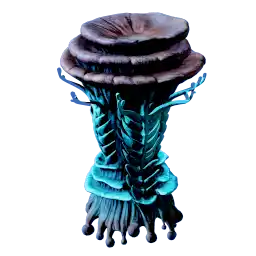
Tallshroom
*Hyphen tallshroom*. A mysterious, chitinous life form with no clear terrestrial analog. 1. Hyphen Hyphens are colonies of hard-shelled hecaspids: shell-making algae. (Algae on this world descended from a star-like 'solarian' cell, while all animal life descended from an elongated 'polarian' cell.) Hecaspids in the colony align their shells into a column, forming tough armored threads, or hyphae. On Earth hyphae are characteristic of fungi, but it is not clear if an analogous group exists on this world. 2. Tallshroom The tallshroom is a complex organism with differentiated organs, but all its structures are fundamentally threadlike — hyphenated — and constructed of tough biopolymer akin to chitin. Gill-like structures along the flanks collect oxygen and chemistry from the water, fruiting bodies disperse reproductive cells, and the central body forms a sealed 'wellhead'. 3. Armored driller Tallshrooms drill their hyphae into the rock below, cracking open their own hydrothermal vents. The body captures the outflow of this vent, where bacteria convert minerals into energy. If the outflow becomes too hot or rapid, the tallshroom's drumlike top blows open, releasing the catastrophic overflow. 4. Viral history Like the mammalian placenta, the tallshroom's hyphae evolved in an explosion of retroviral inserts. These viral proteins are expressed in the tips of the drill fibers. Hyphae may have originally evolved as viral predators—inserting a symbiotic virus into armored life forms by growing on and cracking through their bodies. 5. Cousins Despite millions of years of evolutionary separation, the tallshroom shares elements of its body plan with the false fission drum *Polymephycite tympanum*, a fellow member of clade Scyllidae. It is unknown whether this represents convergent evolution, mimicry, or a viral gene transfer. Assessment: indicator of new evolutionary pathways unique to this world.
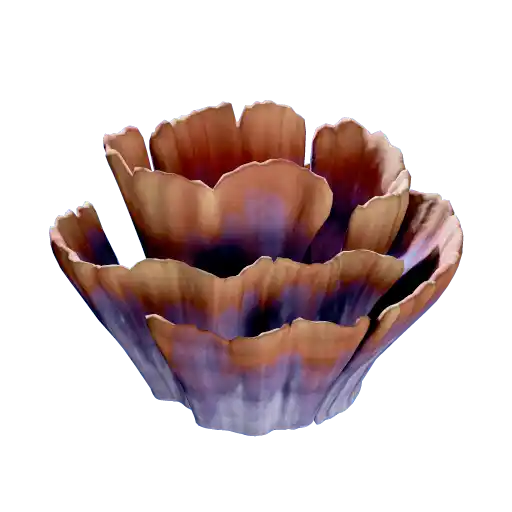
Curtain Gorgon
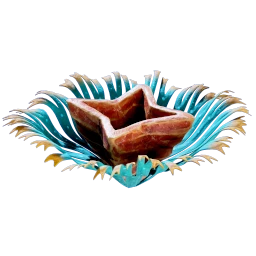
Cradle Shootroot
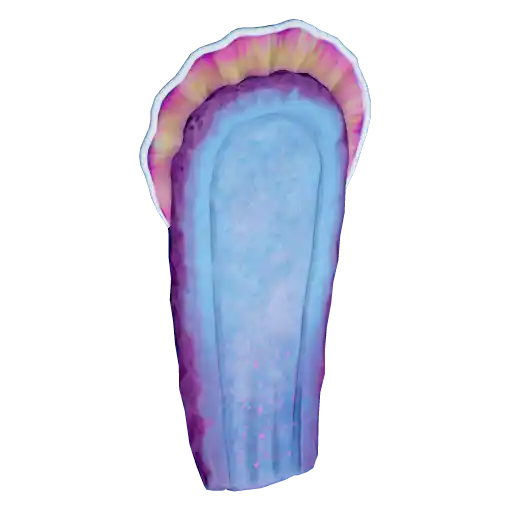
Macaron Sponge
*Symphon macaron*. A sponge that has developed a disc of flagellated feeding cells. Named for the dessert sandwich cookie (not available in current fabricator settings). 1. Hardened plates Instead of a sponge's normal inner and outer layers, the macaron develops two hard plates of pinacoderm. These anchor the feeding disc to a holdfast. 2. Feeding disc The sponge's mesohyl (internal jelly) has specialized into feeding disc, with tentacled cells that pull particles from the surrounding seawater. This leaves the delicate jelly vulnerable to predators and parasites. 3. Hostage exchange The feeding disc hosts the larvae of sponge-eating organisms in its pores. By providing a shelter and habitat for their young, the macaron may buy itself a degree of safety and defense. (These larvae are themselves tempting prey for many species.) 4. Unusual protein expression Many of the cells in the feeding disc express proteins also found in the hosted larvae. This may be a recognition signal to attract the desired species. ASSESSMENT: Inedible despite name. Await further updates.
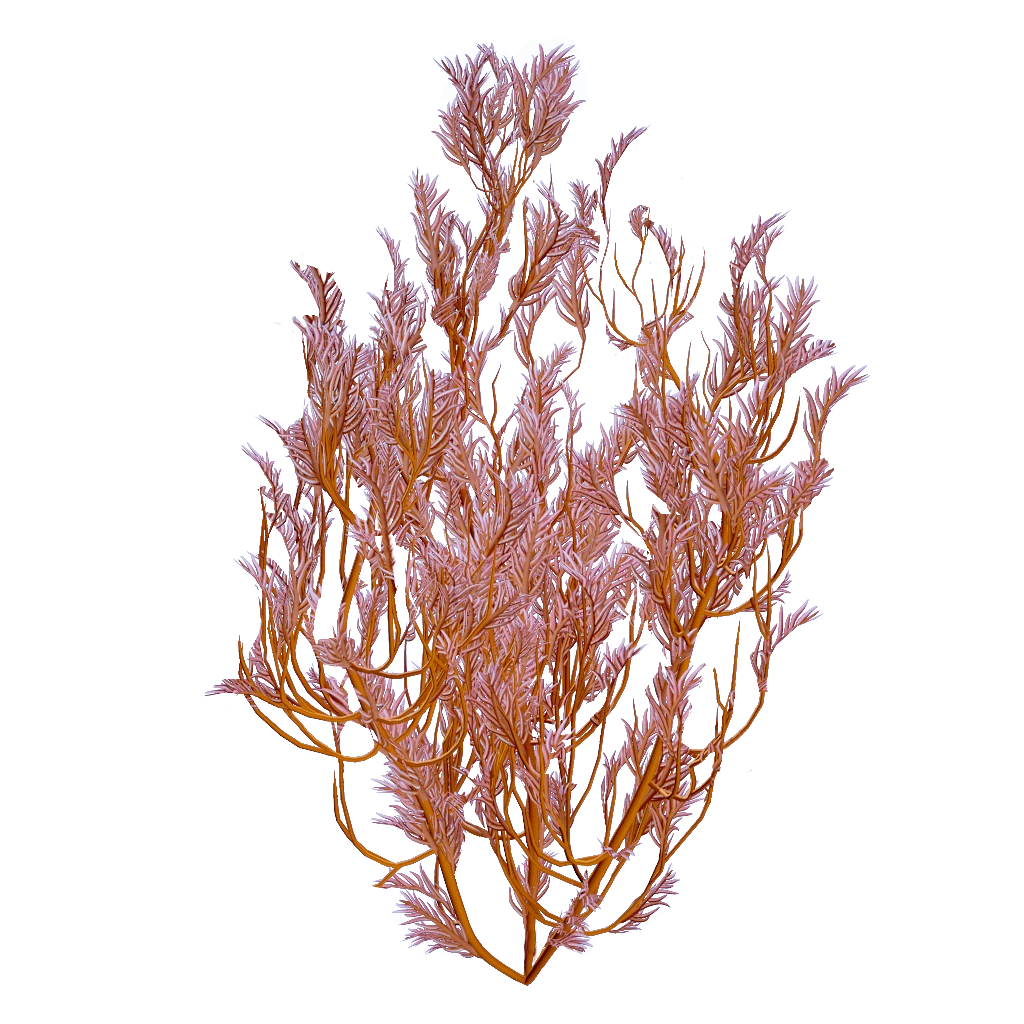
Fern Kelp
Fibrous Pulp Recipe Tree
Used In
5These recipes use Fibrous Pulp as an ingredient.